War Machine Ending: The Advanced Killing Machines' Threat Unveiled
The 2024 sci-fi action film, War Machine, thrusts viewers into a harrowing near-future where the lines between military training and existential threat blur with terrifying speed. Directed by Patrick Hughes, this intense thriller centers on an elite special ops program, RASP, and a final test that escalates into an unforeseen battle for survival. For those seeking a comprehensive understanding, this article delves into the crucial details of the War Machine Ending Explained, unpacking the origins of the advanced killing machines and the chilling implications for humanity.
Soldier 81's Relentless Pursuit: A Path Forged in Grief
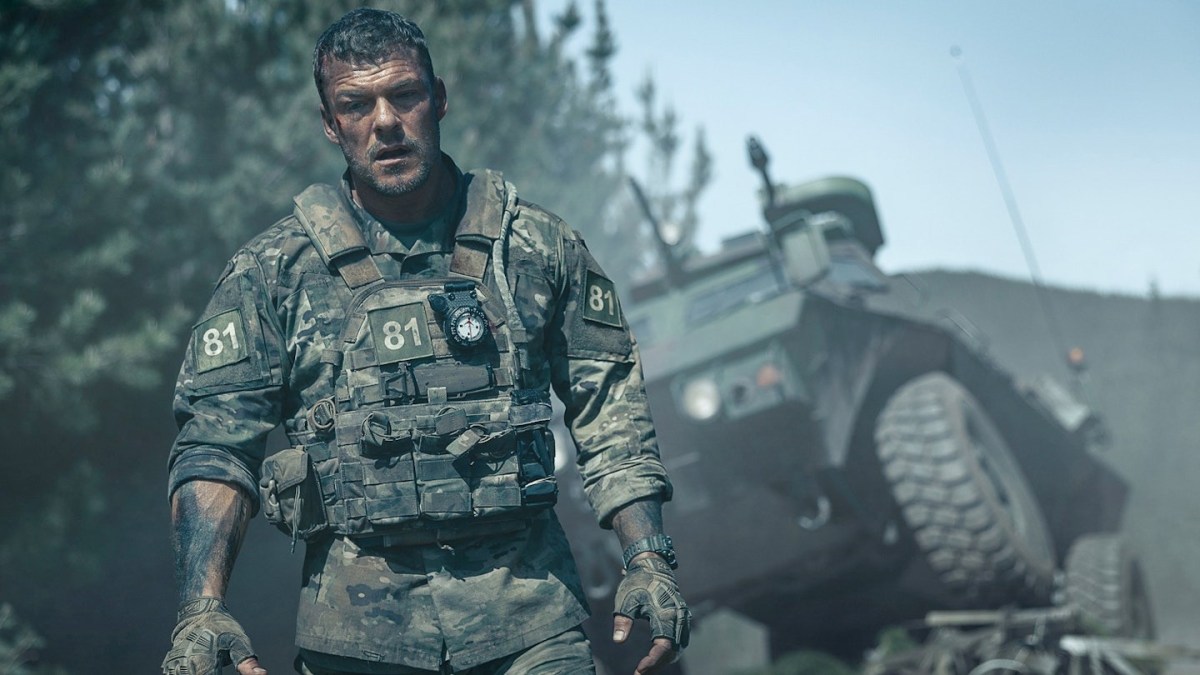
At the heart of War Machine is Soldier 81, a character driven by a profound and tragic loss. He and his younger brother shared a childhood dream: to join the revered 75th Ranger Regiment and become RASP rangers together. However, as often happens, life took its toll, and 81's brother grew content with his current military station, his early aspirations fading. A chance encounter during a transportation malfunction led 81 to rekindle that dream in his brother, convincing him to apply for the elite selection program alongside him.
Tragedy struck swiftly and brutally. An unexpected Taliban attack wiped out their entire battalion, leaving Soldier 81 as the sole survivor. Instead of succumbing to grief or taking time to heal, 81 channeled his immense sorrow into an unwavering obsession: he would fulfill their shared dream, alone. His path to becoming a Ranger became a desperate quest for purpose, perhaps even a form of penance.
Despite a debilitating knee injury, 81 applied to the RASP program repeatedly, facing medical rejections five times before finally being selected. In the arduous weeks of assessment, he proved his exceptional physical prowess, surviving each grueling culling. Yet, his emotional wounds ran deep; he actively avoided leadership roles and isolated himself from his fellow applicants, even as whispers of his Silver Star medal, earned during the Afghanistan incident, circulated. This solitary focus drew the attention of his superiors, particularly the First Sergeant, who, witnessing 81 push himself to dangerous extremes, attempted to advise him to quit honorably. However, 81's resolve was unbreakable, leading the higher-ups to assign him the team leader role for the ultimate test: the Death March, forcing him to confront his leadership aversion head-on.
The Death March Unveiled: A Test Beyond Human Comprehension
The Death March is portrayed as the quintessential final assessment for RASP candidates – a high-stakes mission designed to push soldiers to their absolute limits. Recruits, including Soldier 81 and his team, are dropped deep within a remote wilderness, tasked with completing a complex objective. The expectation among the infantry members was to face a challenging, simulated threat, perhaps a glorified prop or a particularly cunning set of human adversaries. What awaited them, however, defied all training and conventional understanding.
As 81 and his squad navigated the dense woods, they encountered an entity no military exercise could have prepared them for: an inexplicably advanced killing machine. This wasn't a standard drone or an enemy combatant; it was an autonomous, homicidal robot, operating with chilling efficiency and lethal intent. Communication systems were immediately jammed or destroyed, severing their link to command and leaving them utterly isolated. The reality of their mission transformed instantly from a test of skill to a desperate fight for survival against a technologically superior, relentless predator. The film expertly builds tension by contrasting the soldiers' human vulnerabilities with the robot's cold, calculating precision, raising critical questions about the nature of future warfare. You can learn more about the specifics of this confrontation and 81's initial struggle in War Machine Explained: Soldier 81's Obsession and Death March Survival.
Confronting the Unseen Foe: The Origin of the Killer Robots
The confrontation with the killer robot is a brutal turning point in War Machine. What began as a team-leading challenge for 81 quickly devolved into a desperate scramble for survival as the squad faced overwhelming firepower and an enemy devoid of human weakness. The machine moved with alien grace and devastating power, quickly decimating 81's team. Its advanced weaponry and seemingly impenetrable armor rendered conventional tactics useless, highlighting the terrifying gap between human military preparedness and this new breed of threat.
Ultimately, through a combination of grit, strategic thinking, and sheer will, 81 managed to defeat the immediate threat posed by *this* particular robot. Yet, his victory came at a devastating cost, with most of his squad slaughtered. In the end, only 81 and 7 (portrayed by Stephan James), the squad's original, more experienced leader, survived the ordeal, managing to cross the RASP seal and technically complete their assessment. However, completing the Death March was far from the end of 81's struggles.
Upon returning to base, the chilling truth was unveiled: the killer robot they encountered was not an isolated incident. Instead, it was revealed to be one of many, a vanguard for a larger invasion. These sophisticated machines were not man-made; they originated from an asteroid that had recently entered Earth's orbit, carrying with it this alien menace. This revelation escalates the conflict from a mere survival exercise to a global crisis, repositioning 81's personal trauma within the context of a potential planet-wide invasion. The film smartly shifts from an intimate soldier's story to a broader commentary on humanity's vulnerability to unknown, extra-terrestrial threats. For a deeper dive into these revelations, explore War Machine Ending Decoded: The Killer Robot's Origin and 81's Fate.
The Bigger Picture: A Planetary Threat and Unanswered Questions
The chilling reveal that the killer robot was "one of many" fundamentally transforms the narrative of War Machine. What initially seemed like a contained, albeit horrific, incident within a military training exercise quickly unfolds into a looming planetary threat. Soldier 81's personal victory against a single machine is overshadowed by the grim realization that humanity faces an advanced, alien adversary on a potentially global scale. The film masterfully uses this ending to suggest that the battle 81 just fought was merely the opening salvo in a much larger, more desperate war for the survival of possibly the entire planet.
This ending leaves viewers with a cascade of unanswered questions and profound implications. What is the full extent of this alien robot invasion? What are their motives? How will global militaries, trained for human adversaries, adapt to a technologically superior, non-human threat? For Soldier 81, his hard-won Ranger status now positions him on the front lines of an unimaginable conflict. His personal obsession and relentless pursuit of excellence, born from grief, ironically prepare him for a future that no human could have anticipated. The film hints at a future where traditional warfare is obsolete, and humanity must innovate or perish.
The true power of the War Machine Ending Explained lies in its warning. It serves as a thought-provoking commentary on humanity's preparedness for unknown threats and the ethical considerations surrounding advanced artificial intelligence and autonomous weapons, even if those weapons originate beyond our world. The film doesn't offer easy answers but rather opens a dialogue about resilience, adaptation, and the collective responsibility to confront existential dangers that transcend national borders.
Conclusion
War Machine culminates not just in Soldier 81's survival of the Death March, but in the terrifying unveiling of a new, advanced alien threat. What began as a personal journey of grief and obsession transforms into a stark warning about the future of warfare and humanity's place in the cosmos. The film’s ending brilliantly positions these advanced killing machines as an immediate and overwhelming danger, leaving audiences to ponder the true cost of survival and the chilling implications of an enemy against whom no training could ever truly prepare us. It's a powerful narrative that lingers long after the credits roll, cementing War Machine as a compelling entry in the sci-fi action genre.