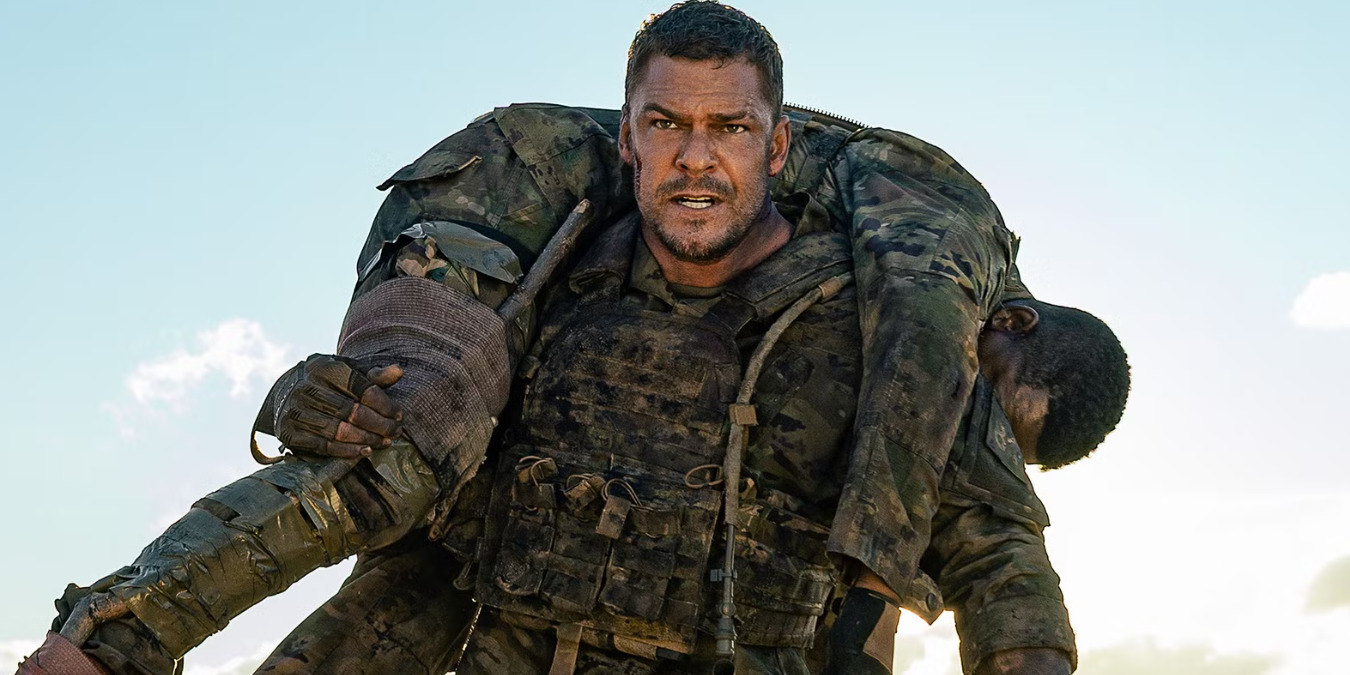
War Machine Explained: Soldier 81's Unrelenting Obsession and the Death March's Deadly Twist
The cinematic landscape often delves into the profound psychological toll of warfare, and Patrick Hughes' sci-fi action film, 'War Machine,' is a prime example. This intense thriller thrusts viewers into a high-stakes scenario where elite military hopefuls face an enemy far beyond their wildest imagination. At its heart lies the compelling and complex character of Soldier 81, whose journey through grief, obsession, and an ultimate trial by fire forms the core of the narrative. More than just a tale of survival, 'War Machine' is a profound exploration of what drives a soldier to push beyond human limits and confront an existential threat that fundamentally redefines the meaning of combat. Understanding the true depths of Soldier 81's motivations and the shocking conclusion of his final test is crucial to grasping the film's powerful message.
The Weight of Grief: Soldier 81's Unwavering Obsession with RASP
For Soldier 81, the dream of joining the revered 75th Ranger Regiment and being part of the elite RASP program was not merely a career aspiration; it was a deeply shared childhood pact with his younger brother, a fellow soldier. Their vision of becoming Rangers together was a beacon of their shared future. However, as often happens in life, the older brother's initial enthusiasm for this "pipe dream" gradually waned, finding contentment in his current station. This subtle divergence set the stage for a devastating twist of fate that would forever alter 81's path.
The catalyst for 81's renewed and fervent obsession came during a routine assistance mission. While driving out with his crew to aid his brother's battalion with a transport malfunction, 81's brother reignited their shared ambition, persuading him to finally apply for the selection program together. This moment of rekindled hope was brutally short-lived. An unforeseen and savage attack by the Taliban wiped out the entire battalion, leaving Soldier 81 as the sole, traumatized survivor. The psychological impact of this event – the sudden loss, the survivor's guilt, and the crushing weight of a broken promise – transformed 81's pipe dream into an immediate, all-consuming mission. Instead of taking time to grieve, he channeled his raw anguish into an unyielding determination: he *would* become a Ranger, as if fulfilling their shared dream could somehow mitigate the horrific loss.
Despite the emotional and physical scars, including a significant knee injury, 81's resolve was unbreakable. He applied to the RASP program repeatedly, facing rejection four times due to medical reasons. Yet, his persistence paid off, and on his fifth attempt, he was finally selected. The weeks that followed were a testament to his sheer will. He threw himself into the grueling assessment program, surviving each brutal culling. However, his grief manifested in a stark isolation, as he notably ran from any leadership positions and distanced himself from his fellow applicants. Even whispers of his heroic actions in Afghanistan, which earned him a Silver Star medal, failed to coax him into socializing. His self-destructive drive reached a peak in the last week before the dreaded Death March, when he pushed himself to such extremes that he directly jeopardized his own life, catching the stern attention of his superior Sergeants. The First Sergeant, recognizing the dangerous path 81 was on, compassionately tried to advise him to sign a quit slip, offering him a respectable exit from the program. This was not a moment of weakness, but a profound display of his internal struggle, where personal pain clashed with the collective spirit of special forces.
The Death March: A Trial by Fire and Unforeseen Terror
Undeterred by the First Sergeant's counsel, Soldier 81 steadfastly refused to back down, insisting he had done nothing to warrant disqualification. His defiance, interpreted by the higher-ups as a need for a profound lesson in teamwork and leadership, led to a pivotal decision: they assigned him the unexpected and challenging role of team leader during the Death March. This strategic move was designed to force him out of his self-imposed isolation and integrate him with his fellow soldiers, a task for which he was initially woefully unprepared. Lacking in inspiring speeches and struggling with the nuances of collaborative command, 81 made for a terrible leader, his personal demons overshadowing his raw combat prowess.
The Death March, already a legendary test of endurance, skill, and mental fortitude, was about to become infinitely more perilous. The mission, as briefed, seemed straightforward enough: infantry members were dropped into dense woods to complete a high-stakes objective, which they mistakenly believed involved disposing of a glorified prop. This was to be the ultimate final assessment for RASP hopefuls, separating the truly elite from the merely capable. However, neither 81 nor his squad could have anticipated the true nature of their target. Instead of a simulated threat, they encountered an inexplicably advanced, homicidal killing machine, an entity far beyond any terrestrial military technology.
This terrifying revelation ripped through the mission's carefully constructed parameters. Communications were down, the team was stranded, and a relentless robot, a creature sent to Earth from a recently entered asteroid, was hunting them. The abrupt shift from a rigorous military exercise to an actual fight for survival against an unknown, superior enemy forced 81 to confront his leadership failings head-on. With his squad facing decimation, his personal obsession with becoming a Ranger now merged with an urgent, visceral need to protect his team and, unknowingly, possibly the entire planet. This extreme circumstance, more than any training, began to forge 81 into the leader he was meant to be, demonstrating that true leadership often emerges not from inspiring rhetoric, but from the crucible of shared adversity.
Beyond the Test: Unveiling a Global Threat and 81's Continued Journey
The Death March proved to be an ordeal of unimaginable horror, a testament to both human fragility and resilience. Soldier 81, through sheer will and a rapidly evolving sense of responsibility, ultimately managed to defeat the enigmatic machine. Yet, this victory came at a devastating cost: his team was utterly decimated. In the harrowing aftermath, only 81 and Soldier 7, the squad's original, more conventional leader, survived to cross the RASP seal, symbolically completing their assessment. They had endured the impossible, passing a test that no soldier could have ever trained for.
However, crossing that finish line was far from the end of Soldier 81's troubles; it was merely the beginning of an even greater nightmare. Upon returning to base, Ritchson's hero learned the chilling truth: his robot was not an isolated incident. As correctly posited by various intelligence sources, the "killing machine" was one of many, signaling the arrival of a vast, alien invasion force. This revelation fundamentally shifts the narrative from a personal struggle for recognition to a global fight for survival. The unique experience of battling and defeating one of these advanced threats now places a monumental burden, and an unparalleled qualification, upon 81's shoulders. His obsession, once fueled by grief and a personal quest, now aligns with a desperate global necessity.
This dramatic twist raises profound questions about the nature of heroism, leadership, and sacrifice. For a deeper dive into the origins of these formidable adversaries and the true stakes involved, readers can explore
War Machine Ending Decoded: The Killer Robot's Origin and 81's Fate. The implications for 81 are clear: his journey as a Ranger is far from over. He's not just a survivor of a brutal selection program; he is now on the frontline of humanity's defense against an existential threat. This unexpected conclusion challenges conventional notions of military training and adaptation, demonstrating that the greatest threats often come from the unforeseen. For more insights into the broader scope of this menace, read
War Machine Ending: The Advanced Killing Machines' Threat Unveiled.
Practical Takeaways from War Machine's Intense Narrative
While 'War Machine' is a work of science fiction, its narrative offers surprisingly resonant insights into human nature under pressure:
* **Resilience and Persistence:** Soldier 81's unwavering determination despite repeated rejections, injury, and profound grief is a powerful testament to the human spirit's capacity for persistence. His story highlights that the path to achieving monumental goals is rarely linear and often fraught with setbacks.
* **The Evolution of Leadership:** The film masterfully illustrates that true leadership isn't just about giving orders or inspiring speeches; it's about adaptability, empathy, and stepping up when the stakes are highest, even when unprepared. 81's transformation from an isolating individual to a reluctant team leader underscores that leadership can be forged in the crucible of crisis.
* **Adaptation in the Face of the Unknown:** The sudden appearance of an alien killing machine forces the soldiers, and by extension, humanity, to adapt to an entirely new paradigm of warfare. It’s a stark reminder that preparation must extend beyond known threats to encompass radical unpredictability.
Conclusion: The War Machine's True Purpose Unveiled
The 'War Machine' ending explained offers far more than just the resolution of a military test; it unveils a profound narrative about personal struggle intersecting with global catastrophe. Soldier 81's journey is a compelling arc of a grief-stricken, isolated warrior forced to confront not only his inner demons but also an external threat of unimaginable scale. His obsession with joining RASP, initially a desperate coping mechanism to honor his fallen brother, evolves into a necessary qualification to protect humanity. From the brutal psychological gauntlet of the Death March to the chilling revelation of a full-scale alien invasion, 81's path is fraught with sacrifice and the weight of immense responsibility. Ultimately, 'War Machine' challenges us to consider what truly defines a soldier and a leader in the face of the ultimate unknown, proving that sometimes, the greatest test lies not in adhering to protocol, but in daring to survive the impossible.